.png)
Summary
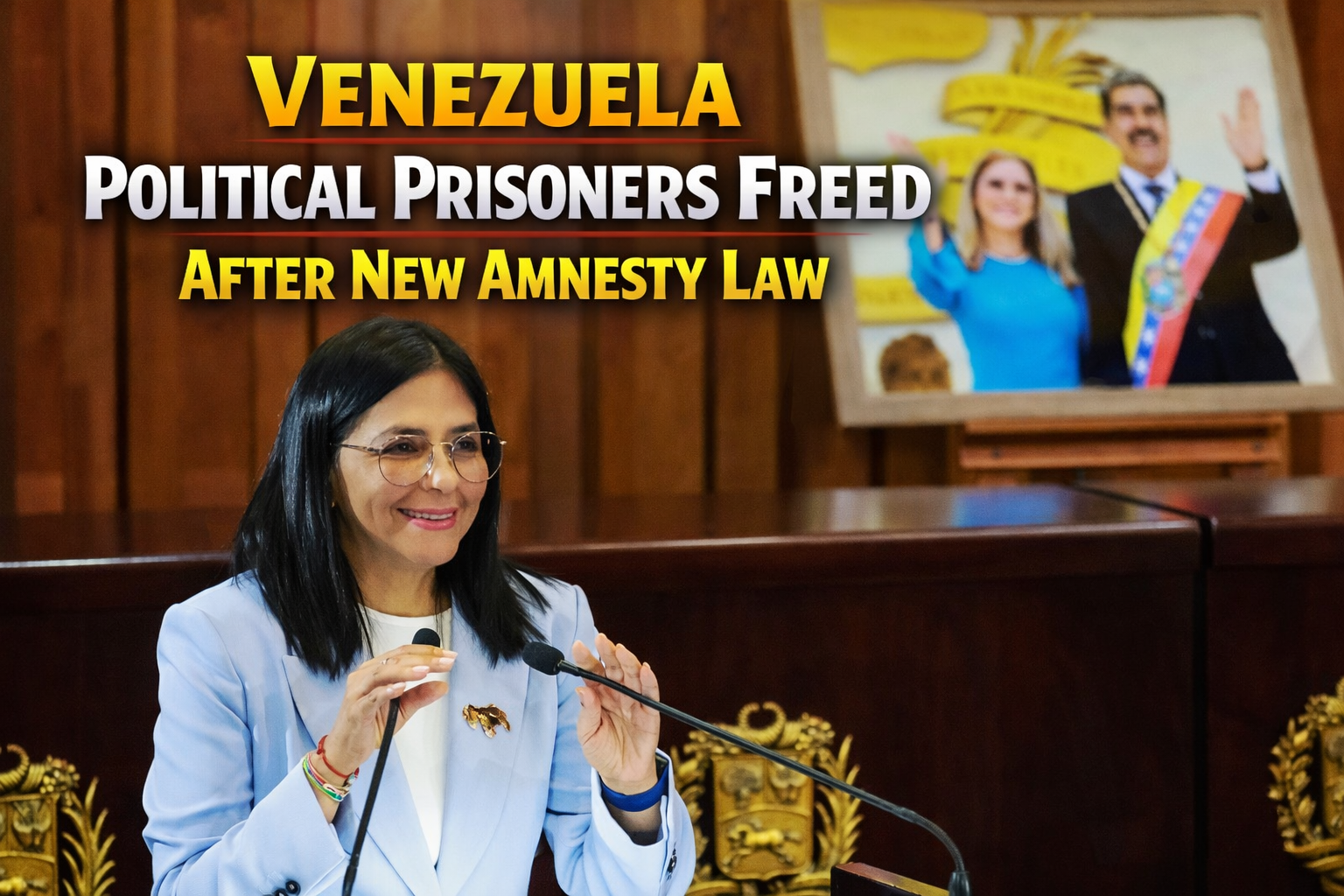
Venezuela has started the process of freeing 379 political prisoners following the passage of a new amnesty law. This decision comes after a major shift in the country’s leadership and the removal of former President Nicolas Maduro from power. The move offers a glimmer of hope to hundreds of families who have spent years waiting for their loved ones to return home. While many see this as a step toward a more open society, critics argue that the law still leaves many people behind bars due to strict legal exceptions
 .
.
Main Impact
The release of these prisoners marks a significant turning point in Venezuela’s political struggle. For a long time, the government used the legal system to silence those who disagreed with its policies. By granting amnesty, the interim government is attempting to show the world that it is moving toward a more democratic system. However, the impact is mixed. While some high-profile figures have already walked free, others remain in prison because the law does not cover certain types of crimes, such as those involving foreign military aid or "terrorism" charges.
Key Details
What Happened
On Thursday, the National Assembly of Venezuela voted unanimously to pass the amnesty law. By Friday, officials were already working to put the plan into action. Jorge Arreaza, a lawmaker in charge of the process, announced on television that the 379 prisoners should be released very quickly, likely within 24 hours. The Public Prosecutor’s Office has sent formal requests to the courts to finalize the paperwork. This fast-paced rollout is part of a larger effort by the interim government to change the country’s image after years of international pressure.
Important Numbers and Facts
- 379: The number of prisoners specifically named for release in this round of amnesty.
- 650: The estimated total number of political prisoners in Venezuela before this announcement, according to the group Foro Penal.
- Exclusions: The law does not apply to people accused of helping foreign powers use force against Venezuela or security forces convicted of "terrorism."
- Leadership: Delcy Rodriguez is serving as the interim president following the removal of Nicolas Maduro by US forces.
Background and Context
To understand why this is happening now, it is important to look at the recent changes in Venezuela’s government. For years, Nicolas Maduro held power despite heavy criticism and claims of election fraud. Recently, a US-led operation removed Maduro from office, and he was taken to New York to face charges related to drug trafficking. In his place, Delcy Rodriguez, who was once the vice president, took over as the interim leader with support from the United States.
The United States currently has a strong influence over the country, including control over Venezuela’s oil sales. The new government is trying to balance the needs of the Venezuelan people with the demands of international allies. Freeing political prisoners is a key part of this balance, as it signals a break from the old way of ruling. However, the country remains divided, and many people are still unsure about the future of their leadership.
Public or Industry Reaction
The reaction to the amnesty law has been a mix of joy and frustration. Outside prisons like Rodeo 1 near Caracas, families have been camping out for weeks. They wait for any news about their brothers, fathers, or sons. For some, the news brought relief. Juan Pablo Guanipa, a well-known opposition politician, announced on social media that he is now "completely free" after being under house arrest. He urged the government to let all political prisoners go and allow those in exile to return home.
On the other hand, some families are heartbroken. Hiowanka Avila, whose brother was arrested in 2018 for an alleged plot against Maduro, told reporters that the law does not help her family. Because her brother was an officer accused of using force, he is excluded from the amnesty. Human rights groups have also raised concerns. They worry that the law might be used to protect people who committed serious abuses in the past, preventing them from ever facing justice.
What This Means Going Forward
In the coming days, more prisoners are expected to walk out of jail and reunite with their families. This will likely improve the public's view of the interim government in the short term. However, the legal process is not automatic. Each case must go through the courts, which some people still view with suspicion. There is also the question of what happens to major opposition leaders like Maria Corina Machado, who is currently in the United States. If the government wants true reconciliation, it may eventually have to address the cases of those currently excluded from the law.
Final Take
The release of 379 prisoners is a positive sign for a country that has suffered through years of political tension. It shows a willingness to move past the era of Maduro and start a new chapter. However, for the families of those still locked away, the fight for justice is far from over. True freedom in Venezuela will depend on whether the law is applied fairly to everyone, regardless of their past political ties.
Frequently Asked Questions
Who is being released under the new law?
The law covers 379 political prisoners who were jailed for opposing the previous government. However, it does not include those accused of working with foreign military forces or security officers charged with terrorism.
| Category | Maduro Era | Post-Amnesty |
|---|---|---|
| Leadership | Nicolas Maduro | Interim Government |
| Prisoner Status | Systemic detention | 379 released |
| Legal Framework | Silencing dissent | New Amnesty Law |
| Global Outlook | Authoritarianism | Democratic transition |
| Limitations | None (Total control) | Legal exceptions remain |
Why is Nicolas Maduro no longer in power?
Maduro was removed from power following a US-led operation. He was taken to the United States to stand trial for drug trafficking and other serious charges. Delcy Rodriguez is now the interim president.
Is the release of prisoners happening immediately?
Officials have stated that the releases should happen very quickly, often within a day of the court orders being processed. However, each case must still be reviewed by the judicial system.